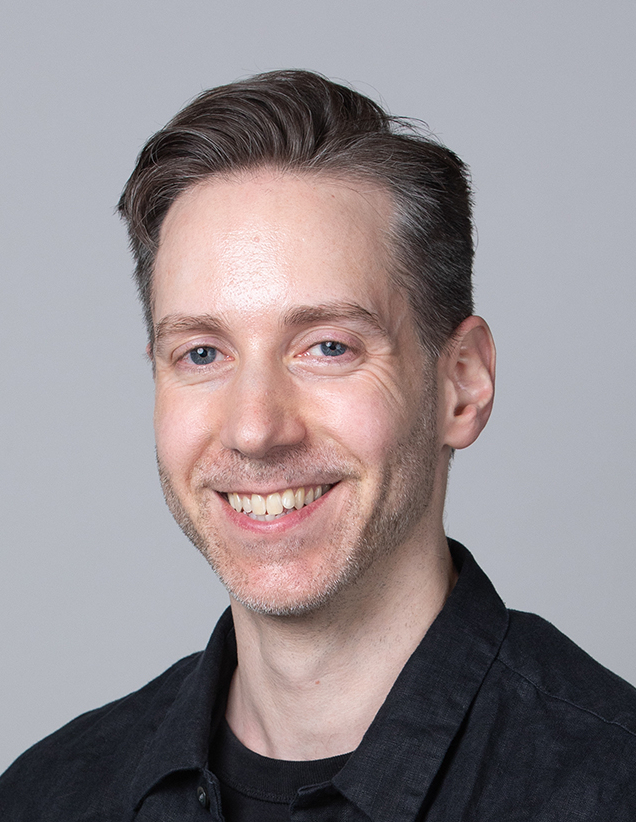
I am an AI research scientist specialised in AI for medical image analysis. My main motivation comes from helping people live longer and happier lives, and I aim to contribute to that by building autonomous AI for cancer screening.
I work as Head of AI research at Lunit , a leading medical AI company.
In my spare time, I love travel, photography, doing sports, and music (I play piano and guitar, both poorly). I'm interested in biohacking, especially the work of David Sinclair and the Blueprint project.
This page contains some information on projects I am working on, as well as some travel photography. I'm a supporter of decentralised social media (the Fediverse) and have moved from Twitter and Flickr to Mastodon and Pixelfed.
Projects
The idea of using computers to analyse medical images is not new and has been around since the mid-sixties, first proposed by Gunnar Gwylym Lodwick. Mammography (X-ray images of the breast) was the first modality to which it was actually applied. R2, a tool that shows markers for regions in the image that look suspicious to the AI behind it, obtained FDA approval in 1998. With the breakthrough in deep learning in 2012, the medical field—and mammography in particular—has received a lot of attention again. Geoffrey Hinton, the godfather of AI, even went so far as to say that radiologists would be completely replaced within five to ten years. He said that in 2016. Even though several studies show human-level performance, we are not there yet.
Currently, AI for medical image analysis is typically applied as a detection or decision aid, or to triage screening studies.
Autonomous AI will have a far bigger impact on healthcare than small incremental improvements for physicians from the use of AI as a detection aid. To reach fully autonomous AI, we need systems that not only match human performance on small in-house datasets, but are proven to work in the wild. About 100 to 200 million mammograms are recorded on a yearly basis. If all of these are read by a computer, small mistakes will accumulate. Systems therefore need to be tested in large-scale prospective studies, just like new drugs are tested, before they are deployed autonomously. Something current systems are notoriously bad at is classifying data outside the distribution of the training set. This means the systems may miss massive and dangerous tumours that have never been seen during training. Similar performance does not mean similar behaviour.
Reaching autonomous AI for the detection of all diseases that humans now detect in medical scans will mean surmounting machine learning, medical, engineering, regulatory, and even philosophical challenges, and will keep us busy for at least a decade or two. Beyond that lies a whole new set of challenges, as completely replacing radiologists, ophthalmologists, and any physician involved in image interpretation comes close to solving artificial intelligence. Combining imaging modalities, images with lab work, anamnesis, and genomic profiles of patients will be a great challenge that can have a massive positive impact on our lives.